A modern solar installation is no longer limited to producing electricity when the sun is shining. For homeowners, installers, and commercial energy users, the larger question is how that electricity can be used at the right time, stored when it is available, and retained when the grid is unavailable. This is where the hybrid solar system becomes increasingly important.
A hybrid solar system combines solar generation, battery storage, energy conversion, loads, and usually the utility grid into one coordinated energy architecture. Instead of treating solar panels and batteries as separate assets, the system manages them as parts of one operating strategy. The result is a system that can prioritize self-consumption, charge batteries with surplus solar power, use stored energy later, and provide backup capability when the system has been designed for it.
For manufacturers and system integrators, the value of this architecture is equally important. A well-designed hybrid solar system gives customers a clearer path from simple photovoltaic generation to a more flexible energy platform. Hootrum develops hybrid inverter solutions for residential and commercial applications, covering multiple power levels, battery voltages, phase configurations, and operating requirements.
A hybrid solar system is an energy system that combines photovoltaic generation with battery storage and intelligent power conversion, allowing electricity to be generated, stored, consumed, or exchanged with the grid according to system priorities.
The defining characteristic is not simply the presence of a solar panel and a battery. The important element is coordinated energy management. The inverter controls the movement of electricity between different parts of the system while responding to load demand, solar availability, battery conditions, grid status, and configured operating priorities.
A typical architecture contains five major elements: photovoltaic modules, a hybrid inverter, a battery system, electrical loads, and the utility grid. Depending on the application, a generator, smart meter, energy management platform, or backup distribution panel may also be integrated.
This architecture is different from a basic grid-tied solar installation. A conventional grid-connected inverter primarily converts DC electricity from the PV array into AC electricity for the building and grid. A hybrid inverter adds bidirectional battery management and can coordinate multiple energy sources and operating modes.
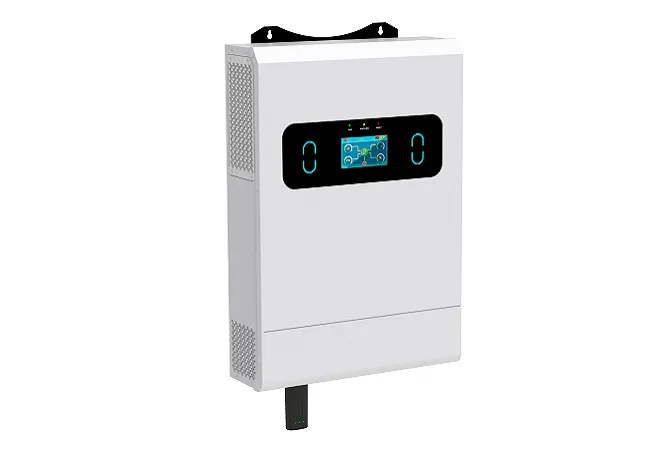
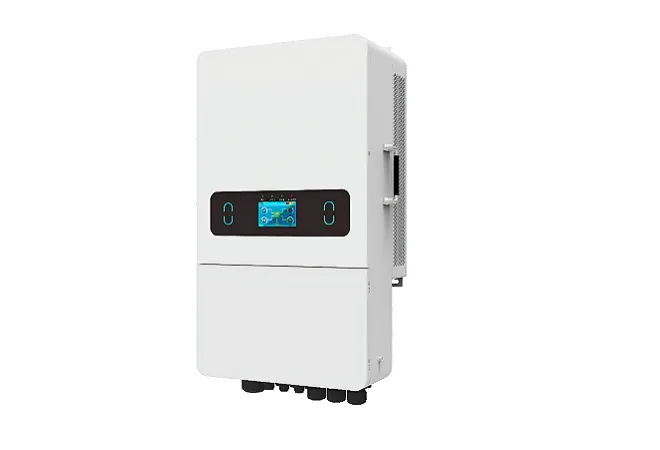
Hootrum's hybrid inverter portfolio demonstrates this range of applications. Its product lineup includes single-phase and three-phase models, with examples spanning approximately 3.6 kW to 15.5 kW and battery configurations including low-voltage 40–60 V systems and higher-voltage battery architectures, depending on the model.
A hybrid solar system manages energy by continuously deciding where available electrical power should go: directly to loads, into the battery, from the battery to the loads, or to and from the utility grid.
During periods of strong solar production, the first objective is often direct self-consumption. If photovoltaic output exceeds immediate demand, the surplus can be directed to battery charging. Once the battery reaches its configured state of charge or charging limit, excess energy may be exported to the grid if the local system permits it.
In the evening, the operating priority can reverse. Solar production falls while household or commercial demand continues. The inverter can discharge the battery to reduce grid consumption, depending on the user's energy strategy and local electricity structure.
During a grid outage, a suitably designed hybrid system can isolate selected loads from the grid and continue supplying them from the battery and available solar generation. However, backup capability should never be assumed merely because an inverter is described as hybrid. The inverter model, wiring architecture, transfer method, battery capability, and local electrical requirements all determine whether backup operation is possible.
This flexibility is one of the central reasons hybrid solar systems are attractive for modern energy applications.
Battery storage improves solar utilization by shifting electricity generated during one period to a later period when electricity demand is higher or grid electricity is less desirable.
The U.S. Department of Energy explains that solar production and electricity demand do not always occur at the same time, particularly because solar production declines in the evening while household demand can remain high. Storage allows electricity generated during the daytime to be used later. [1]
Consider a building that produces 8 kWh of usable excess solar electricity around midday but consumes most of its electricity between 5 p.m. and 10 p.m. Without storage, part of that midday production may be exported or curtailed depending on the local system. With a battery, the energy can be shifted toward the evening demand period.
This does not mean that every unit of stored energy is delivered back to the load. Battery charging, storage, conversion, and discharge all involve energy losses. The practical goal is therefore not simply to maximize the amount of electricity stored, but to use the storage capacity where it creates meaningful value.
For customers evaluating a hybrid inverter, battery compatibility, charge and discharge power, operating voltage, control strategy, and monitoring capabilities should be considered together rather than independently.

A hybrid solar system can reduce grid dependence by increasing the amount of energy that a home or business can generate and use internally, while allowing battery storage to cover selected periods when solar production is low.
Grid dependence can be reduced in several different ways. The simplest approach is self-consumption: solar energy directly serves local loads rather than being imported from the utility. A second approach is energy shifting, in which excess daytime solar generation is stored and used later. A third approach is backup, where stored energy is reserved for grid interruptions.
These strategies should not be confused with complete energy independence. A grid-connected hybrid solar system still depends on the utility when solar and battery resources are insufficient, unless it has been intentionally designed as an off-grid or microgrid-capable system.
For commercial users, reducing grid dependence can also involve managing peak demand. A battery may be scheduled to discharge during higher-demand periods when the tariff structure makes that strategy economically relevant.
The main benefits of a hybrid solar system are flexible energy use, better solar utilization, battery-backed resilience, configurable energy management, and a pathway for future system expansion.
The first benefit is timing. Solar electricity does not have to be consumed at the exact moment it is generated. The battery adds an energy-shifting layer that can better align generation with actual demand.
The second benefit is resilience. A system designed with backup output can keep selected critical loads operating during a utility outage. The value of this feature depends heavily on how the backup circuits are defined. A refrigerator, communications equipment, lighting, server equipment, or selected industrial controls may be treated differently from non-critical high-power loads.
The third benefit is system flexibility. Modern hybrid inverters may provide multiple operating modes, allowing users or installers to configure priorities for PV, battery, grid, and generators. Hootrum models, for example, include configurations supporting grid-connected and off-grid operating scenarios, programmable battery charging and discharging strategies, and in some products generator integration.
The fourth benefit is scalability. A well-designed hybrid architecture can allow battery capacity, generation capacity, or parallel inverter capacity to be expanded when the electrical architecture supports it.
A grid-tied solar system primarily focuses on converting solar electricity for immediate building consumption and grid interaction, while a hybrid solar system adds battery-based energy management and, where supported, backup capability.
| System Characteristic | Grid-Tied Solar | Hybrid Solar System |
|---|---|---|
| Solar Generation | Yes | Yes |
| Battery Integration | Usually external or optional | Core system function |
| Energy Shifting | Limited | Yes |
| Backup Capability | Usually requires additional equipment | Can be integrated when supported by the design |
| Load Management | Basic to moderate | More configurable |
| Expansion Potential | Depends on architecture | Often strong for storage-oriented upgrades |
A grid-tied solution can still be appropriate for customers who primarily want solar generation without storage. The hybrid architecture becomes more relevant when battery storage, backup power, or intelligent energy scheduling is part of the project requirement.
A hybrid solar system is particularly useful for homes that have meaningful evening electricity consumption, unreliable grid power, strong interest in backup capability, or plans to add battery storage as part of a longer-term energy strategy.
Residential energy patterns are becoming increasingly diverse. Heat pumps, induction cooking, electric vehicles, home offices, water heating, and air-conditioning can shift electricity demand well beyond daylight hours. A solar array may generate abundant energy at midday while the household's largest loads occur in the morning and evening.
Storage can partially bridge that timing mismatch.
For homeowners, battery sizing should not be based only on total daily electricity consumption. The more useful questions are which loads need backup, when electricity is consumed, how much solar energy is available, how much power the inverter can deliver, and how long the battery is expected to support selected circuits.
Hootrum's residential energy storage system solutions are positioned around this combined solar-plus-storage architecture, allowing the inverter, storage, and residential loads to be considered as one system rather than isolated components.
Commercial hybrid solar systems use solar generation and battery storage to improve energy utilization, support critical operations, and manage electricity demand according to the facility's operating profile.
A factory, warehouse, retail site, office building, or small industrial plant can have a very different demand curve from a residential home. Electricity may be consumed steadily during working hours, with significant peaks caused by compressors, pumps, HVAC systems, production equipment, or charging infrastructure.
In these environments, the battery is not simply an emergency reserve. It can become an operational asset. Solar energy can support daytime demand directly, while battery power can be strategically deployed during high-demand periods or when grid power is unavailable.
The value of a commercial hybrid system therefore depends on the relationship between PV capacity, battery energy capacity, inverter power capacity, load profile, tariff structure, and business continuity requirements.
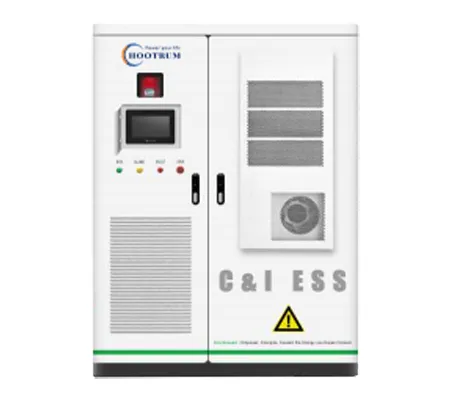
Hootrum currently lists commercial energy storage solutions ranging from tens of kilowatts to larger modular systems, including configurations such as 30 kW/50 kWh, 50 kW/100 kWh, and 100 kW/215 kWh. These examples illustrate why commercial systems need to be evaluated by both power and energy capacity rather than one number alone.
The most important hybrid solar system selection factors are load profile, PV capacity, battery capacity, inverter power, electrical phase, battery voltage, grid requirements, environmental conditions, monitoring, and future expansion.
The first question is power. How much electricity must be supplied simultaneously? A house running an air conditioner, pump, oven, water heater, and other equipment may have a much higher instantaneous demand than its monthly energy consumption suggests.
The second question is energy. How much electricity needs to be stored, and for how long?
The third question is electrical compatibility. The selected inverter must match the battery voltage range, PV input requirements, phase configuration, grid voltage, and local installation rules.
The fourth question is environmental exposure. Outdoor installations may require an enclosure with a suitable ingress protection rating. For example, Hootrum's HB3125EH048 three-phase hybrid inverter is listed with an IP66 protection rating, while different models in the portfolio have different protection levels.
Buyers should therefore avoid selecting a hybrid solar system by looking only at nominal kW. The complete architecture matters.
Hootrum approaches hybrid solar applications as integrated energy systems rather than standalone inverter purchases. Its portfolio includes single-phase and three-phase hybrid inverters, low-voltage and high-voltage battery configurations, grid-connected and off-grid capable architectures, and residential and commercial storage solutions.
For example, Hootrum's hybrid inverter range includes models such as the HY5K-1P-EU at 5 kW, HY8K-3PH-EU at 8 kW, and higher-capacity three-phase products. The portfolio also includes U.S.-oriented split-phase products, allowing system configuration to be matched to market-specific electrical requirements.
For distributors, installers, and OEM/ODM partners, the more important consideration is often whether the manufacturer can support the complete project logic: inverter selection, battery compatibility, operating modes, monitoring, system integration, and application-specific technical communication.
A project inquiry should therefore include the target country, grid voltage and phase, expected PV capacity, battery voltage and usable capacity, peak load, critical loads, backup requirement, and whether future expansion is planned. These details allow Hootrum's engineering team to recommend an appropriate product architecture rather than simply matching a model number.
The main advantage is energy flexibility. A hybrid solar system can coordinate solar generation, battery storage, building loads, and the grid so that electricity can be generated, stored, and used at different times. This can improve solar self-consumption and provide backup capability when the system is correctly designed.
Hybrid systems are designed around battery integration, but specific inverter models may support operation without an installed battery under certain operating conditions. A battery becomes particularly valuable when the project needs evening energy shifting, backup power, or more advanced energy management.
It can when the inverter, battery, wiring, protection equipment, and backup circuits are specifically configured for outage operation. Not every grid-connected hybrid installation automatically provides whole-home backup.
Battery sizing depends on usable energy demand, critical loads, desired backup duration, PV production, inverter charge and discharge capability, and operating strategy. A battery should not be selected solely from the home's daily electricity consumption.
Yes. Commercial projects can use hybrid solar systems for solar self-consumption, peak-demand management, backup power, and energy scheduling. The system should be designed from the facility's electrical load profile rather than from a generic residential sizing formula.
A hybrid solar system typically retains grid connectivity while adding storage and energy-management capability. An off-grid system is designed to operate independently of the utility grid and therefore requires a different approach to energy production, storage, load management, and system resilience.
A hybrid solar system turns solar generation into a more flexible energy resource by connecting PV production, battery storage, loads, and the utility grid through coordinated power management. The practical benefits include better timing between generation and demand, greater use of stored solar energy, configurable energy strategies, and backup capability for appropriately designed installations.
The strongest results come from designing the system around real electrical conditions rather than selecting products by headline power ratings. PV capacity, battery capacity, inverter power, phase, voltage, load characteristics, grid conditions, backup requirements, and future expansion all need to work together.
For system integrators, distributors, and energy project developers, Hootrum provides a broad hybrid inverter and energy storage portfolio that can be configured for residential, commercial, and specialized applications. A project-specific inquiry with technical requirements gives the manufacturer a much stronger basis for recommending the appropriate inverter and storage architecture.
External References
U.S. Department of Energy: Solar Integration and Energy Storage Basics
IEC 62109-2:2026 – Safety Requirements for Photovoltaic Inverters
 English