A hybrid inverter rarely fails because one component simply reaches a predetermined “expiration date.” Long-term performance is influenced by temperature, dust, humidity, electrical loading, battery behavior, firmware, ventilation, connection quality, and the operating environment around the equipment.
That is why hybrid inverter maintenance should be treated as a preventive process rather than a response to alarms. A maintenance program gives installers and system owners a way to detect abnormal operating conditions before they become major failures.
For residential users, maintenance may mean reviewing system performance and keeping the installation environment clean and accessible. For commercial facilities, the process is more structured and can include thermal inspection, connection checks, event-log analysis, battery health review, firmware management, and documented service intervals.
Hootrum develops hybrid inverter systems for residential and commercial energy applications, including low-voltage and high-voltage battery configurations, multiple phase architectures, and models designed for different environmental conditions. The maintenance approach should therefore always be matched to the exact model and installation environment.
Hybrid inverter maintenance is the planned inspection, testing, cleaning, configuration review, and performance monitoring used to keep a hybrid inverter and its connected solar-plus-storage system operating safely and reliably.
Maintenance covers more than the inverter enclosure itself. Because the inverter coordinates PV generation, battery storage, grid power, and loads, abnormal behavior can originate outside the inverter.
For example, a battery that repeatedly reaches a protection limit may create an inverter alarm even though the inverter hardware itself is functioning correctly. Similarly, restricted airflow can increase thermal stress and cause repeated derating without any internal hardware fault.
A good maintenance program therefore combines physical inspection with operating-data analysis.
Temperature matters because power electronic devices generate heat during operation, while excessive ambient temperature can reduce thermal headroom and contribute to protective derating or accelerated component stress.
An inverter installed in a cool, ventilated utility room operates under very different thermal conditions from one installed in a poorly ventilated enclosure under direct sunlight. Both may be rated for the same nominal power, but their actual operating conditions can differ significantly.
Maintenance should therefore include checking ventilation openings, heat sinks, fans where applicable, and the surrounding installation environment. Dust accumulation should be addressed carefully because it can reduce airflow and create additional thermal insulation around heat-dissipating components.
Outdoor installations also deserve attention because temperature cycles, moisture, dust, insects, and other environmental factors can affect connectors and enclosure integrity.
Hootrum products use different enclosure ratings depending on the intended application. Selected commercial hybrid inverter products, for example, are listed with IP66 protection. Maintenance teams should never assume that all models have the same environmental capability.
Routine hybrid inverter maintenance should focus on the physical condition of the equipment, electrical connections, operating environment, system logs, battery behavior, and visible changes in system performance.
A visual inspection should look for unusual discoloration, corrosion, damaged cable insulation, loose conduit, moisture ingress, accumulated dust, blocked vents, or mechanical deformation.
The display or monitoring platform should then be reviewed for abnormal alarms, repeated warnings, unusual temperature readings, unexpected battery behavior, unexplained PV production changes, and changes in grid interaction.
Electrical checks may include connection torque verification according to manufacturer instructions, inspection of protective devices, grounding continuity where appropriate, and assessment of connector condition.
The exact test interval depends on the installation environment and manufacturer's requirements. A residential indoor system with a clean, stable environment may require less frequent physical inspection than a commercial outdoor system exposed to dust, heat, or humidity.
The correct hybrid inverter maintenance interval depends on operating environment, equipment design, local conditions, manufacturer requirements, and system criticality rather than one universal calendar rule.
A useful approach is to combine several maintenance intervals instead of using one large annual checklist.
| Interval | Recommended Focus |
|---|---|
| Daily to Weekly Monitoring | Alarm history, output behavior, battery status, abnormal shutdowns |
| Monthly | Visual condition, ventilation, environmental changes, monitoring communications |
| Quarterly or Site-Specific | Cable condition, protection equipment, dust accumulation, operating logs |
| Annual Service | Detailed electrical inspection, configuration review, documentation update |
| Event-Based | Inspection after severe weather, unusual faults, overheating or electrical incidents |
These intervals are planning guidance rather than a replacement for the product manual. A dusty warehouse, coastal installation, agricultural site, or high-temperature outdoor cabinet may justify more frequent physical inspection than a clean indoor residential installation.
PV performance should be monitored as part of maintenance because changes in solar output can reveal problems with the array, shading, wiring, connectors, MPPT behavior, or inverter operation.
Photovoltaic modules naturally experience some performance degradation over time. A widely cited NREL review covering nearly 2,000 degradation measurements reported a median degradation rate of about 0.5% per year for the systems and modules represented in the literature review. [1]
That number should not be interpreted as an exact decline for every installed system. Actual performance depends on module technology, environment, installation quality, climate, and system configuration.
For maintenance teams, the practical lesson is that long-term output should be interpreted against historical performance and site conditions rather than expecting a perfectly flat production curve.
A sudden output drop is different from gradual degradation. Unexpected changes deserve investigation because they may indicate a failed string, connector issue, shading change, inverter fault, sensor problem, or communication failure.
Battery maintenance is a critical part of hybrid inverter maintenance because the inverter and battery operate as an interconnected energy system rather than independent devices.
For lithium battery systems, the battery management system controls parameters such as charge limits, discharge limits, temperature monitoring, and protective thresholds. The inverter may receive some of these limits through a communication link.
Maintenance should therefore confirm that the battery communication channel remains stable and that the inverter is receiving reasonable battery status information.
Operators should also monitor unusual changes in state-of-charge behavior. A battery that appears to reach full charge or discharge significantly faster than before may warrant further investigation.
Temperature is another important factor. Batteries should be installed and operated within the temperature range specified by the manufacturer. Repeated operation outside recommended conditions can affect battery performance and safety.
Hootrum supplies lithium battery products alongside inverter solutions, including floor-mounted and commercial energy storage systems. For an integrated project, maintenance records should identify both inverter and battery model numbers, firmware versions, communication settings, and service history.
Hybrid inverter alarms that indicate electrical protection, overheating, insulation problems, communication failure, or repeated abnormal shutdowns should receive prompt attention because repeated protective events can indicate a developing system issue.
Not every alarm has the same severity. A temporary communication interruption may require a different response from a persistent over-temperature or insulation fault.
The most useful maintenance approach is to analyze frequency and context. An alarm that appears once under an unusual grid event may have a different significance from an alarm that occurs every afternoon under high solar load.
Keep a record of the alarm code, time, inverter operating state, PV output, battery state, ambient conditions, and recent system changes. This creates much better diagnostic information than simply reporting that “the inverter has an error.”
Never bypass protective functions to stop alarms. Safety protections exist to prevent equipment damage and hazardous operating conditions.
Software and firmware maintenance can be part of a hybrid inverter service program when updates are issued to improve compatibility, correct known software issues, or support system functions.
However, firmware should never be updated casually on a live commercial system without checking compatibility, update instructions, rollback procedures, and system impact.
Before an update, document the current firmware version and configuration. Confirm that the battery communication protocol, monitoring platform, and grid settings remain compatible with the intended firmware.
After the update, repeat key functional checks. These can include PV input, charging, discharging, grid interaction, backup operation, monitoring communication, and alarm handling.
This is particularly important for systems with multiple devices or parallel inverter configurations, because firmware compatibility can become part of the overall system behavior.

Maintenance can support energy efficiency by helping the system operate under its intended electrical and thermal conditions and by identifying abnormal losses before they become persistent.
Efficiency is influenced by conversion conditions, loading, temperature, battery operating state, PV input characteristics, and system control strategy. A dirty or poorly ventilated installation may operate under greater thermal stress, while a deteriorating connection can create unwanted electrical resistance.
Maintenance should therefore compare current system performance with historical data rather than relying only on the inverter's nominal efficiency specification.
For example, if the same site shows a significant and persistent reduction in PV energy relative to solar conditions, the maintenance team should investigate whether the change is caused by the PV array, inverter behavior, battery strategy, grid conditions, or measurement differences.
For businesses, energy efficiency analysis can be combined with load scheduling. Hootrum's commercial hybrid inverter solutions include products with time-based charging and discharging strategies, allowing operational energy management to be considered as part of system performance.
Preventive maintenance aims to identify abnormal conditions before they become failures, while reactive repair responds after a problem has already affected system operation.
| Maintenance Approach | Preventive Maintenance | Reactive Repair |
|---|---|---|
| Primary Goal | Detect and manage abnormal conditions early | Restore operation after a fault |
| Data Use | Historical trends and regular monitoring | Fault codes and event history |
| Downtime | Can often be scheduled | May be unexpected |
| Planning | Scheduled | Event-driven |
| Documentation | Service records and trend analysis | Repair reports and fault records |
Reactive repair will always remain necessary for some failures. The purpose of preventive maintenance is not to eliminate every fault, but to reduce avoidable failures and provide better information when faults do occur.
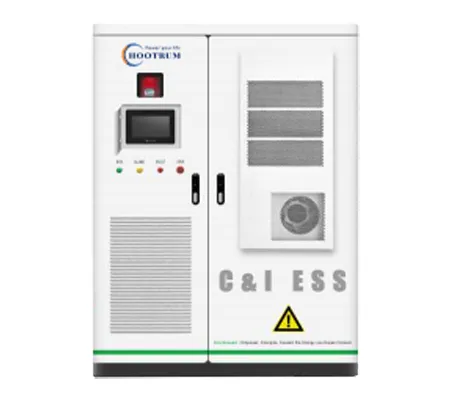
Commercial hybrid inverter maintenance should combine equipment inspection with system-level performance analysis because commercial energy storage systems often contain more devices, higher power levels, and more complex operating strategies than residential installations.
A commercial service program can include thermal inspection, cabinet inspection, cable and connector checks, battery status review, BMS communication verification, EMS communication checks, protective device inspection, ventilation checks, alarm trend analysis, and review of charging and discharging schedules.
Hootrum's commercial energy storage portfolio includes systems such as 30 kW/50 kWh, 50 kW/100 kWh, 100 kW/215 kWh, and larger configurations. These systems may include integrated batteries, PCS, BMS, EMS, thermal management, and fire protection functions. Because the number of components increases with system size, maintenance must consider the complete architecture rather than focusing only on the inverter front panel.
Commercial operators should also maintain documented service procedures and escalation rules. A system supporting a factory or critical process may have different maintenance priorities from a non-critical office installation.
A hybrid inverter service report should record what was inspected, what was measured, what abnormal conditions were found, what actions were taken, and what follow-up is required.
A useful report should identify the exact inverter model and serial number, battery model, installation location, service date, technician, firmware version, major configuration parameters, alarm history, inspection results, and corrective actions.
Photographs of relevant areas can strengthen the report, particularly for commercial installations. The report should also identify any items that were not tested so that future technicians know the limits of the service visit.
For Hootrum distributors and installers, good service documentation can significantly simplify future technical support. When an issue is escalated to the manufacturer, detailed records allow the technical team to distinguish between product faults, installation problems, battery behavior, and external grid events.
Hootrum's hybrid inverter portfolio is designed around different residential and commercial application requirements, so reliability is addressed through product configuration, protection functions, monitoring, and system compatibility rather than one universal inverter design.
Different products include different features. Some models support generator input. Some provide multiple MPPT channels. Some support parallel operation. Some support high-voltage batteries, while others are designed around 40–60 V low-voltage systems. Selected products provide high ingress protection for demanding environments.
For customers, this means maintenance planning should begin with the exact product specification. A maintenance checklist designed for a small single-phase indoor inverter may not be appropriate for a three-phase commercial system with battery cabinets and external protection equipment.
Hootrum's hybrid inverter portfolio provides multiple configurations, allowing maintenance procedures to be adapted to the installed product and application.
Where backup or standalone operation is involved, the system may also need the broader electrical checks associated with an off grid inverter architecture.
For residential projects, Hootrum's residential energy storage system solutions can also be evaluated as part of a complete inverter-and-storage maintenance strategy instead of servicing the inverter alone.
The inspection interval depends on the model, environment, system criticality, and manufacturer requirements. Monitoring can be continuous, while physical inspection may be scheduled monthly, quarterly, annually, or more frequently in harsh commercial environments.
It may need cleaning when dust or debris accumulates around ventilation areas or heat-dissipating surfaces. Cleaning methods should follow the manufacturer's instructions and should never introduce moisture or physical damage into the equipment.
There is no single task for every installation. A strong maintenance program combines alarm monitoring, thermal and physical inspection, electrical connection checks, battery status review, PV performance analysis, and documentation.
Yes. The inverter and battery exchange operating information and power continuously. Incorrect battery settings, communication problems, temperature issues, or battery protection events can influence inverter charging and discharging behavior.
Firmware updates may be appropriate when supported by the manufacturer, but they should be planned carefully. The current configuration and firmware version should be documented before an update, and important functions should be tested afterward.
The decision depends on the fault, product age, spare-part availability, repair cost, system requirements, and the condition of the connected equipment. A technical assessment is preferable to replacing equipment solely because an alarm has appeared.
Hybrid inverter maintenance is most effective when it is treated as an ongoing system-management process rather than a once-a-year emergency inspection. The inverter, PV array, battery, grid connection, protection equipment, and monitoring system all influence long-term performance.
Routine monitoring helps identify abnormal trends early. Physical inspection helps control environmental and electrical risks. Battery and PV analysis provides additional information about system performance. Documentation turns individual service visits into a useful long-term maintenance record.
Reliable maintenance also depends on using the correct procedure for the exact equipment. Hootrum supplies multiple hybrid inverter and energy storage architectures, so maintenance requirements should always be aligned with the model's electrical specifications, environmental rating, battery configuration, and intended application.
For installers, distributors, and project owners, a structured maintenance program can improve visibility into system health, reduce avoidable service interruptions, and make technical support more efficient when a genuine fault occurs.
External References
U.S. Department of Energy: Solar Integration and Storage Basics
IEC 62109-2:2026 – Particular Safety Requirements for PV Inverters
 English