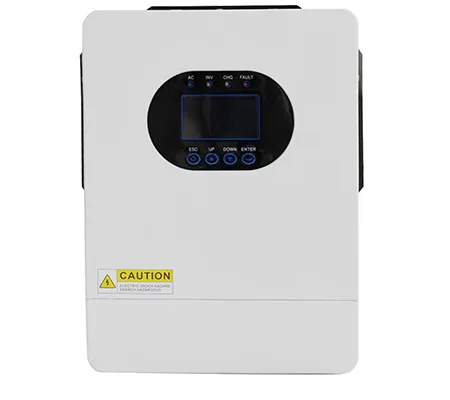
Choosing between a micro inverter and a hybrid inverter depends on the specific energy application, system design, and future energy management requirements. Micro inverters are ideal for projects requiring module-level optimization, flexible installation, and improved performance under complex rooftop conditions. Hybrid inverters are better suited for solar systems that require battery storage integration, backup power capability, and intelligent energy management.
For residential homeowners, commercial developers, and solar installers, the right inverter choice should not be based only on initial cost. Important factors include system size, shading conditions, energy consumption patterns, battery requirements, grid reliability, installation complexity, and long-term expansion plans.
As solar energy systems continue evolving from simple power generation solutions into intelligent energy platforms, understanding the differences between micro inverters and hybrid inverters helps buyers select systems that deliver better efficiency, reliability, and return on investment.
Hootrum provides advanced solar energy solutions covering Micro Inverter, Hybrid Inverter, and Battery Storage System technologies. With experience in renewable energy applications, Hootrum helps global customers develop flexible solar solutions for residential, commercial, and energy storage projects.
The main difference between a micro inverter and a hybrid inverter is how they manage solar power conversion and energy storage.
A micro inverter is installed at the individual solar panel level. Each photovoltaic module has its own inverter, allowing independent power optimization. This design reduces the impact of shading, panel mismatch, and different roof orientations.
A hybrid inverter is a centralized energy management device that connects solar panels, batteries, household or commercial loads, and the electrical grid. It converts solar energy while also controlling battery charging, discharging, and backup power functions.
| Comparison Factor | Micro Inverter | Hybrid Inverter |
|---|---|---|
| Installation Position | Installed directly behind individual solar panels | Installed as a central system component |
| Main Function | Module-level solar power optimization | Solar conversion and energy storage management |
| Battery Integration | Usually requires additional storage solutions | Designed for direct battery integration |
| Best Application | Residential rooftops with complex layouts | Residential and commercial solar-plus-storage systems |
| System Expansion | Flexible panel-level expansion | Flexible energy storage and load expansion |
A micro inverter converts DC electricity from each solar panel into AC electricity directly at the module level. Unlike traditional centralized inverter systems, where multiple panels share one inverter, micro inverter technology allows every panel to operate independently.
This architecture provides several technical advantages:
Independent optimization of each solar panel
Better performance under partial shading conditions
Higher installation flexibility
Easier system monitoring at the module level
Reduced impact from individual panel failures
Micro inverters are particularly suitable for residential projects where roofs may have multiple directions, different tilt angles, or partial shading caused by surrounding buildings and trees.
One of the biggest advantages of micro inverter systems is independent panel optimization. In traditional systems, one underperforming solar panel may affect the performance of the entire string. Micro inverter technology minimizes this issue by allowing each module to operate separately.
This makes micro inverters suitable for:
Residential rooftops with multiple orientations
Buildings with partial shading challenges
Small solar installations requiring flexibility
Projects where future panel expansion is expected
Because each solar panel has an independent inverter, system operators can monitor individual module performance. This makes fault identification easier and reduces troubleshooting time.
For installers, module-level monitoring provides valuable information about system performance and helps improve maintenance efficiency.
A hybrid inverter combines solar power conversion and battery energy management in one integrated system. It acts as the control center of a solar-plus-storage solution by managing energy flow between photovoltaic panels, batteries, electrical loads, and the grid.
Unlike micro inverter systems that mainly focus on panel-level optimization, hybrid inverters are designed for applications requiring energy independence and storage flexibility.
A hybrid inverter can:
Convert solar energy for household or commercial use
Store excess solar power in batteries
Provide backup electricity during grid outages
Optimize electricity consumption based on demand
Support smart energy management systems
The increasing demand for energy independence has accelerated the adoption of hybrid inverter technology. Rising electricity costs, unstable grids, and the growth of renewable energy have encouraged users to combine solar generation with battery storage.
A modern hybrid inverter system allows users to:
Use solar energy during the day
Store excess electricity for evening consumption
Reduce dependence on grid power
Maintain backup power availability
Improve overall energy efficiency
For customers planning complete solar-plus-storage solutions, selecting a reliable hybrid inverter is an important step in achieving stable and efficient energy management.

Residential solar projects require careful consideration because homeowners often have different priorities, including electricity savings, backup power, installation limitations, and future expansion.
| Residential Requirement | Recommended Solution |
|---|---|
| Simple rooftop with no shading | Hybrid inverter or traditional inverter solution |
| Complex roof structure | Micro inverter system |
| Need for battery backup | Hybrid inverter system |
| Module-level monitoring | Micro inverter system |
| Energy independence | Hybrid inverter with battery storage |
Commercial solar projects usually have different priorities compared with residential installations. Businesses often focus on reducing electricity costs, improving operational efficiency, maximizing available rooftop space, and ensuring long-term system reliability.
For commercial applications, the choice between micro inverter and hybrid inverter technology depends on project scale, energy consumption patterns, and whether battery storage is required.
| Commercial Requirement | Recommended Solution |
|---|---|
| Large-scale rooftop solar system | Hybrid inverter or commercial centralized solutions |
| Complex building structures | Micro inverter solutions may provide better flexibility |
| Peak electricity cost management | Hybrid inverter with battery storage |
| Backup power requirements | Hybrid inverter system |
| Simple grid-connected projects | Grid-tied inverter solutions |
For commercial projects with high energy demand, hybrid inverters are often preferred because they support energy storage, load management, and future system expansion.
The total cost of a solar system should not be evaluated only by the initial equipment price. Installation complexity, maintenance requirements, energy performance, and future expansion costs also influence the overall investment value.
| Cost Factor | Micro Inverter | Hybrid Inverter |
|---|---|---|
| Initial Equipment Cost | Usually higher due to individual inverter installation | Generally lower for larger systems |
| Installation Complexity | Simple module-level installation but more units required | Centralized installation with fewer devices |
| Maintenance | Module-level monitoring simplifies fault identification | Centralized maintenance approach |
| Energy Storage Integration | Requires additional solutions | Designed for battery integration |
| Long-Term Flexibility | Strong for panel expansion | Strong for energy management expansion |
Micro inverters may provide better value for smaller residential projects with complicated roof conditions, while hybrid inverters usually provide stronger economic advantages for systems requiring battery storage and energy management.
Micro inverter systems can be combined with battery storage, but the system architecture is usually more complex compared with hybrid inverter solutions. Additional energy management equipment may be required to coordinate solar generation, battery charging, and electricity consumption.
Hybrid inverters are specifically designed for solar-plus-storage applications, making them a more integrated option for users who prioritize:
Energy independence
Backup power capability
Battery optimization
Smart energy management
For projects where battery storage is a core requirement, a hybrid inverter generally provides a simpler and more efficient solution.
Battery storage has changed the way solar systems are designed. Traditional photovoltaic systems mainly focused on generating electricity during daylight hours, while modern energy systems focus on controlling when and how electricity is used.
A complete storage solution allows users to:
Store excess solar generation
Use stored electricity during high-demand periods
Reduce electricity costs
Improve backup power reliability
Increase renewable energy utilization
For customers planning a complete renewable energy solution, a properly designed solar battery energy storage system should work seamlessly with the selected inverter technology.
The best inverter solution depends on the project's technical requirements rather than one technology being universally better.
| Application Scenario | Recommended Choice | Main Reason |
|---|---|---|
| Small residential rooftop | Micro inverter | Better module optimization and installation flexibility |
| Home with battery backup requirements | Hybrid inverter | Integrated energy storage management |
| Commercial solar with energy storage | Hybrid inverter | Better energy control and scalability |
| Complex shaded rooftop | Micro inverter | Independent panel-level operation |
| Off-grid applications | Hybrid inverter | Supports battery-based independent operation |
Before making a final decision, buyers should evaluate:
Solar system size
Available installation space
Shading conditions
Electricity consumption patterns
Need for battery storage
Future expansion plans
Regardless of whether choosing a micro inverter or hybrid inverter, advanced technical features can significantly improve system performance.
| Feature | Importance |
|---|---|
| High Conversion Efficiency | Improves solar energy utilization and reduces losses |
| Smart Monitoring | Allows users to track system performance remotely |
| Advanced Protection | Improves safety and system reliability |
| Communication Capability | Supports integration with batteries and energy management platforms |
| Scalable Design | Allows future system upgrades |
Hootrum focuses on developing reliable solar energy solutions for global markets, including Micro Inverter, Hybrid Inverter, and Battery Storage System technologies.
The company understands that different customers require different solar architectures. Residential users may need flexible module-level optimization, while commercial customers may require intelligent energy management and storage integration.
Hootrum supports partners with:
Advanced solar inverter solutions
Battery storage compatibility
Technical application support
Reliable product performance
Solutions for residential and commercial energy needs
For businesses looking for a reliable hybrid micro inverter solution, Hootrum provides technologies designed to improve solar system flexibility and energy efficiency.
Solar installers play an important role in system design because they must balance customer expectations, technical requirements, and project budgets.
Before recommending micro inverter or hybrid inverter systems, installers should evaluate:
Customer energy consumption habits
Local electricity conditions
Installation environment
Maintenance requirements
Future battery storage plans
Available project budget
A professional recommendation should focus on long-term system performance rather than only initial installation cost.
The better choice depends on the application requirements. Micro inverters are suitable for projects requiring module-level optimization, flexible installation, and improved performance under shading conditions. Hybrid inverters are more suitable for systems requiring battery storage, backup power, and intelligent energy management.
For residential projects with complex rooftops, micro inverters may provide better solar optimization. For homes and businesses that want energy storage and greater energy independence, hybrid inverters are usually the preferred option.
A hybrid inverter and a micro inverter solve different system requirements, so one does not completely replace the other. A hybrid inverter manages energy conversion and storage at the system level, while a micro inverter optimizes each solar panel individually.
The selection should depend on system design, installation conditions, energy goals, and whether battery storage is required.
Efficiency depends on the project environment and system design. Micro inverters can achieve better energy harvesting when solar panels experience different shading conditions or have different orientations. Hybrid inverters can provide excellent efficiency while offering additional battery management and energy storage functions.
The most efficient solution is the one that matches the specific installation conditions.
Hybrid inverters are designed to work with battery storage, although some models may operate without batteries depending on their operating modes. Adding batteries allows users to store excess solar energy, improve energy independence, and provide backup power during grid interruptions.
For solar-plus-storage applications, battery integration is one of the main advantages of hybrid inverter technology.
The lifespan of both micro inverters and hybrid inverters depends on product quality, installation environment, operating conditions, and maintenance. Professional-grade inverters are designed for long-term operation with protection features that help reduce the impact of temperature changes, electrical stress, and environmental conditions.
Choosing a manufacturer with strong quality control and technical support is important for achieving reliable long-term performance.
For solar battery storage applications, hybrid inverters are generally more suitable because they are specifically designed to manage communication between solar panels, batteries, loads, and the grid.
A hybrid inverter provides integrated control over charging, discharging, backup power, and energy optimization, making it an efficient choice for modern solar storage projects.
Micro inverters and hybrid inverters both provide valuable solutions for modern solar energy systems, but they are designed for different application requirements. Micro inverters are ideal for projects that require module-level optimization, flexible installation, and improved performance in complex rooftop environments. Hybrid inverters are better suited for users who need battery storage integration, backup power, and intelligent energy management.
For homeowners, installers, and commercial energy developers, the best inverter choice should be based on system design, energy consumption patterns, future expansion plans, and long-term operational goals. Evaluating these factors helps ensure higher energy efficiency, improved reliability, and stronger investment returns.
Hootrum continues to provide advanced solar inverter and energy storage solutions for global customers. Through reliable Micro Inverter, Hybrid Inverter, and battery storage technologies, Hootrum helps partners develop flexible renewable energy systems that meet the changing demands of modern power applications.
 English