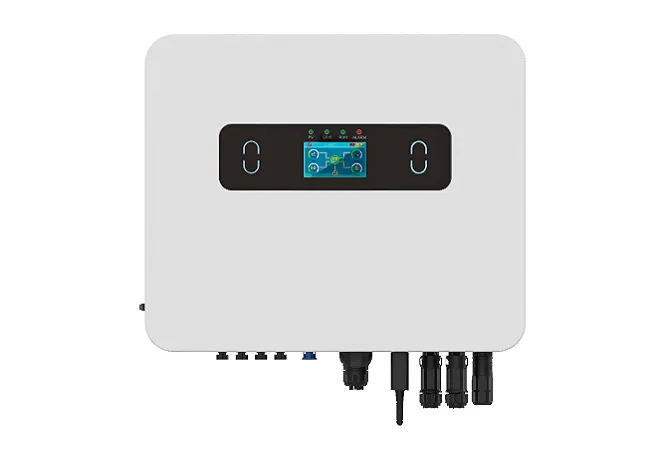
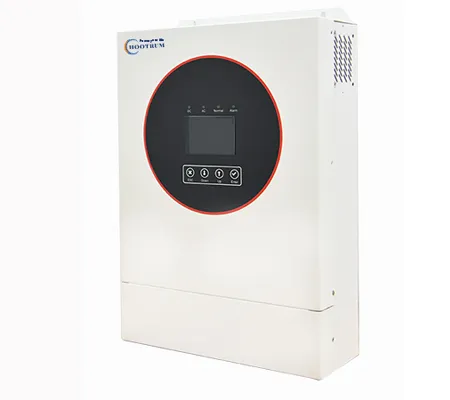
In 2026, commercial energy buyers are under pressure from three directions at once: demand charges that spike unpredictably, time-of-use tariffs that penalize grid consumption during peak windows, and growing expectations around power resilience for critical operations. "Installed watts" is no longer the metric that matters—bankable savings per year is. A hybrid inverter solar strategy directly targets these pressures by coordinating PV generation, battery storage, and smart load control to reduce peak grid demand, improve solar self-consumption, and protect critical loads during outages.
For businesses deploying distributed or modular PV sections alongside a hybrid system, a 1kw micro inverter adds panel-level optimization, simplified monitoring, and phased expansion capability without redesigning the broader system. Hootrum's microinverter portfolio covers both pure microinverter and battery-ready hybrid microinverter options—from the compact 1.0M-G1P-EU (1 kW, 230 Vac, 50/60 Hz) to higher-capacity models—serving residential and commercial solar applications. The sections below walk procurement teams and energy managers through the mechanics, specifications, application fit, and TCO math behind a hybrid inverter solar approach.
Peak shaving means reducing the maximum power a facility draws from the grid during expensive tariff windows. For businesses on demand-charge tariffs—where the monthly bill includes a charge based on the highest 15- or 30-minute average kW recorded—even a single daily spike can add thousands of dollars to the annual energy cost. A hybrid inverter solar system attacks this problem at its root.
The core logic operates in three modes:
Daytime solar priority: PV generation supplies facility loads first, reducing grid import during production hours.
Battery discharge at peak: when grid prices or demand charges peak—typically mid-morning to early evening on commercial tariffs—the system dispatches stored battery energy to reduce grid import, flattening the demand curve.
Off-peak charging: when solar production exceeds load, or when grid rates are low (overnight on TOU tariffs), the battery charges for the next peak cycle.
The financial impact is site-specific and depends heavily on the load curve, tariff design, and battery sizing. NREL research confirms that solar and storage can work together for demand charge management, with savings driven primarily by the alignment between the battery dispatch strategy and the customer's peak demand profile. For facilities with consistent, predictable peak events—manufacturing shift starts, refrigeration compressor cycles, HVAC morning ramp-up—the savings case is strongest and most bankable.
Hybrid inverter ROI is therefore not just about solar generation yield. It is about how much of the demand charge line item can be systematically reduced over a 10–15 year asset life.
A commercial hybrid inverter solar system coordinates three power flows simultaneously:
Solar generation → Power conversion → Load and storage dispatch
PV modules generate DC power. The hybrid inverter converts and manages this energy across AC loads, the battery bank, and the grid connection—prioritizing self-consumption, then storage, then export based on the programmed dispatch strategy. During a grid outage, a properly designed system with transfer switching can isolate critical loads and continue supplying them from solar and battery, providing backup power for business operations that cannot tolerate interruption.
For distributed or modular PV sections, Hootrum's microinverter lineup adds a complementary layer. The 1.0M-G1P-EU—a 1 kW micro inverter rated at >98.5% CEC efficiency with IP67 weather resistance—performs DC-to-AC conversion at the panel level. This means each panel operates independently at its maximum power point, regardless of shading or mismatch on adjacent panels. For rooftops with multiple orientations, HVAC obstructions, or phased build-out plans, panel-level optimization can recover yield that a string-limited design would leave uncaptured.
How this architecture solves business pain points:
Reduces demand spikes during production peaks through battery dispatch
Improves solar self-consumption by storing excess daytime generation for evening use
Provides a storage-ready path for facilities not yet ready for battery investment
Supports critical loads during outages when backup transfer design is included
Enables modular expansion—add panels or battery capacity without replacing the inverter core
Procurement teams need a consistent parameter set to compare quotes and validate ROI assumptions. The following checklist covers the critical inputs.
Solar and Inverter Configuration
Total PV capacity (kW DC)
Module wattage and layout (string vs. module-level)
Grid voltage and frequency (e.g., 230 Vac / 50 Hz)
Single-phase vs. three-phase requirement
Export limit or zero-export requirement
Battery and Industrial Energy Storage Configuration
Battery capacity (kWh) and power output (kW)
Required backup duration for critical loads
Critical load list: server room, cold storage, POS systems, lighting, pumps, HVAC control
Battery chemistry and cycle life expectations
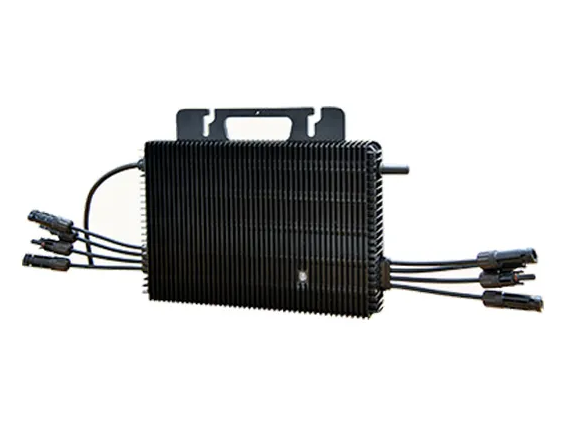
1kw micro inverter Specification Reference For modular or distributed PV sections, the 1.0M-G1P-EU provides the following key parameters:
Rated output: 1 kW, 230 Vac, 50/60 Hz
Peak efficiency: >98.5% CEC efficiency
Wide operating voltage range for strong low-light performance
Ingress protection: IP67 (full weather resistance)
Grid compliance: IEC 62116, VDE-AR-N 4105
Application fit: residential and small-scale commercial PV sections requiring panel-level optimization and monitoring
ROI-Related Financial Parameters
Peak demand charge rate ($/kW/month)
Time-of-use tariff windows and rates
Daily load curve (15-minute interval data preferred)
Solar generation profile for the site
Battery cycling strategy (daily peak shaving vs. backup reserve)
Target payback period and LCOE
Manufacturing Plants Motor starts, compressor cycles, and process equipment create short, sharp demand spikes that drive up monthly demand charges disproportionately. Battery discharge timed to these events can flatten the demand curve and deliver measurable monthly savings without disrupting operations.
Cold Storage and Food Logistics Refrigeration loads run continuously and are highly sensitive to outages. A hybrid inverter solar system with properly sized battery backup can maintain refrigeration during peak tariff periods—reducing demand charges—and protect inventory value during grid interruptions. For facilities where a single outage event can cause six-figure spoilage losses, the backup power for business case is straightforward.
Data Rooms and Office Campuses Critical IT infrastructure requires uninterrupted power. A hybrid system with transfer switching supports server rooms and network equipment during outages while simultaneously reducing peak demand charges on the broader facility load. Module-level monitoring from microinverter sections also provides the audit trail that IT and facilities managers require.
Retail, Supermarkets, and Warehouses Evening peak tariff windows often coincide with retail operating hours. Storing solar energy generated during the day and discharging it during the evening peak shifts consumption away from the most expensive grid tariff window—improving both self-consumption ratio and monthly bill savings.
Distributed Rooftop PV with Shading or Phased Expansion For rooftops with HVAC obstructions, parapets, or multiple orientations, a 1kw micro inverter approach enables each panel to operate independently. Hootrum's microinverter solutions are designed to help each panel operate at peak potential, making them a practical fit for complex commercial rooftops where string-level losses would otherwise reduce system yield and complicate phased build-outs.
Collect 12 months of electricity bills and 15-minute interval load data where available. Identify peak demand events, tariff windows, and the demand charge rate.
Define critical loads that must remain powered during outages. Quantify the cost of downtime for each load category.
Size PV, inverter, and battery capacity based on peak shaving targets and backup duration requirements. Apply conservative yield uplift assumptions—only claim panel-level optimization gains where shading or mismatch genuinely justifies them.
Choose the inverter architecture: central hybrid inverter for the main system, microinverters for distributed or shaded sections, or a mixed approach.
Confirm grid compliance: protection devices, anti-islanding settings, export limits, transfer switching design, and monitoring access control.
Plan commissioning and O&M: acceptance tests, monitoring baseline, battery cycling verification, and O&M playbooks for field teams.
Lower demand charges are the primary TCO lever. Battery dispatch reduces the peak kW recorded on the utility meter each month. On tariffs with demand charges of $10–$20/kW/month, a consistent 20–50 kW peak reduction can generate $2,400–$12,000 in annual savings from this line item alone—before counting energy arbitrage or solar generation value.
Higher solar self-consumption reduces grid import during the day and stores excess generation for evening use, improving the effective value of each kWh generated.
Lower downtime risk for critical loads reduces the financial exposure from outages. For cold storage, data rooms, and production lines, avoided downtime cost can be the single largest ROI driver in the business case.
Modular maintenance in microinverter sections simplifies fault isolation. A failed unit affects only its associated panel; the rest of the array continues producing. Remote identification via monitoring reduces truck rolls and accelerates resolution.
Better ROI visibility through module-level and system-level monitoring allows energy managers to verify savings against projections, detect underperformance early, and produce the documentation required for green financing or ESG reporting.
For commercial buyers in 2026, the strongest solar investment is not the lowest equipment price—it is the system that reliably reduces peak demand charges, protects critical loads, and delivers predictable savings over a 10–15 year asset life. A hybrid inverter solar solution paired with properly sized industrial energy storage achieves this through peak shaving, load shifting, backup power, and smarter solar utilization. For modular or distributed PV sections, Hootrum's microinverter lineup—including the 1kw micro inverter 1.0M-G1P-EU—adds panel-level optimization and monitoring flexibility without complicating the broader system design.
Visit the Hootrum Microinverter product page to review the full model range and request a recommended configuration and quotation.
To receive an accurate recommendation, please submit the following:
Work condition: Business type, grid connection type, operating hours, peak-load periods, critical backup load list
Quantity: Total PV capacity, number of modules, inverter quantity, battery capacity target
Size/spec: Module wattage, grid voltage and frequency, battery kWh and kW, installation area, single- or three-phase system
Target metrics: Payback period, peak demand reduction target, backup duration, self-consumption ratio, LCOE target
Current problem: High demand charges, outage exposure, low solar self-consumption, underperforming PV, planned storage upgrade, rising commercial electricity costs
1. What is a hybrid inverter solar system?
A system that combines solar PV generation with battery storage and energy management logic, allowing a business to use solar power directly, store excess energy, and discharge stored power during peak-price periods or grid outages—reducing both energy costs and downtime risk.
2. Hybrid inverter vs. micro inverter vs. string inverter: which is better?
Hybrid inverter: best when battery storage, peak shaving, and backup power are the primary goals.
Micro inverter (e.g., 1kw micro inverter): best for panel-level optimization, modular expansion, and shaded or complex rooftops.
String inverter: most cost-effective for simple, uniform, unshaded arrays where storage is not required.
The right choice depends on tariff structure, roof complexity, backup requirements, and ROI targets. Many commercial projects use a hybrid inverter for the main system and microinverters for distributed sections.
3. How does peak shaving improve ROI?
By discharging battery energy during the highest-demand periods, the system reduces the peak kW recorded on the utility meter. On demand-charge tariffs, this directly lowers the monthly bill. Savings are site-specific and depend on the load curve, tariff design, and battery dispatch strategy—but for facilities with consistent daily demand spikes, the savings case is both measurable and bankable.
4. Does installing a hybrid inverter solar system require modifying the existing electrical system?
Usually yes, at least partially. Battery integration, transfer switching for backup loads, protection devices, and grid-compliance checks typically require some electrical work. A site survey and single-line diagram review are recommended before finalizing the system design and scope.
5. What parameters are needed for an accurate selection and quotation?
Monthly electricity bills, 15-minute interval load data, peak demand charge rate, PV module specs, available installation area, grid voltage and frequency, critical load list, required backup duration, battery capacity target, and target payback period or LCOE.
 English