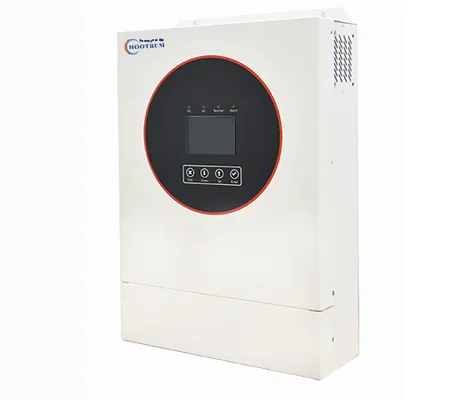
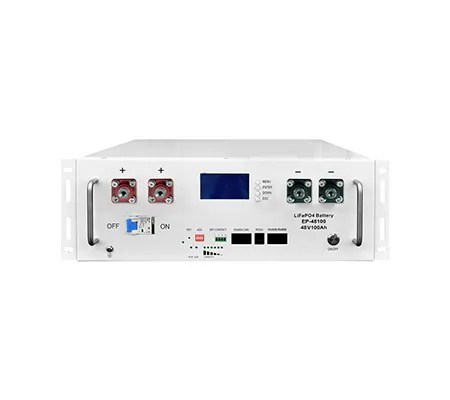
A hybrid solar inverter is a bidirectional power-conversion and energy-management device that coordinates electricity from photovoltaic modules, a battery bank, the utility grid, and connected loads within one system.
In practical terms, it performs more than the basic DC-to-AC conversion associated with a conventional solar inverter. It can direct solar electricity to immediate loads, use surplus power to charge a battery, discharge stored energy when demand rises, import grid electricity when necessary, and support selected backup circuits during an outage when the system has been designed and wired for backup operation.
This combination is why the hybrid inverter is often described as the “energy manager” of a solar-plus-storage installation. The description is useful, but buyers should not treat every hybrid unit as functionally identical. Products differ in battery voltage, allowable PV voltage, number of MPPT trackers, charge and discharge current, grid-interconnection functions, backup output, generator compatibility, phase configuration, enclosure rating, monitoring, parallel capability, and regional certification.
Hootrum develops hybrid inverter platforms for residential and commercial energy systems, including single-phase low-voltage models and three-phase low- and high-voltage options. The relevant choice depends on the electrical system and project duty rather than on rated kilowatts alone.
A hybrid solar inverter works by measuring available solar generation, battery status, load demand, grid conditions, and programmed priorities before routing power through the most suitable path.
Solar modules generate direct current. The inverter’s PV input stage receives that DC power and uses maximum power point tracking to keep each connected string operating near its best available power point. The power electronics then convert the DC into alternating current at the voltage and frequency required by the building or grid. If solar production exceeds current demand, the control system may charge the battery, export to the grid where permitted, curtail generation, or feed a controllable load according to the selected mode.
When solar output falls below demand, the inverter can combine PV, battery, and grid power in different proportions. At night, the system may discharge the battery to serve loads until a defined state-of-charge limit is reached. During expensive tariff periods, it may reduce grid imports through scheduled battery discharge. During an outage, a model with backup capability can isolate the protected circuit from the utility and continue supplying that circuit from solar and storage, provided the available power and battery energy remain within system limits.
The conversion sequence may sound automatic, but reliable performance depends on correct commissioning. The installer must configure battery communication, current limits, grid code, meter or current-transformer direction, export settings, backup circuits, generator input, time-of-use schedules, and protection devices. A good product cannot compensate for an incompatible battery, reversed CT, undersized cable, excessive string voltage, or poorly selected backup load.
A hybrid inverter system is an integrated energy architecture made up of conversion hardware, energy storage, measurement devices, protection equipment, communication interfaces, and the loads they serve.
The PV array supplies DC power. Its module count and string arrangement must fit the inverter’s maximum input voltage, MPPT operating window, starting voltage, current limit, and short-circuit current limit. The battery stores energy and usually communicates with the inverter through a battery-management system. The grid connection provides import and, where regulations allow, export. A smart meter or CT measures power flow at the point of connection. A dedicated backup output or external switching arrangement serves critical loads during an outage.
Inside the inverter, the MPPT stage controls PV operation, the DC bus links the conversion stages, the battery converter manages bidirectional charging and discharging, and the AC inverter creates a controlled sine-wave output. Relays, isolation monitoring, residual-current detection, surge protection interfaces, temperature sensors, and firmware logic support safe operation. The monitoring platform records production, consumption, battery state, alarms, and operating mode.
For buyers comparing systems, the integration quality matters as much as any individual specification. A high rated efficiency does not ensure good project performance if the MPPT window is unsuitable for the planned strings, battery communication is unstable, backup transfer is too slow for the connected equipment, or the installer cannot access useful diagnostic data.
Hybrid inverter operating modes are control strategies that determine whether solar, battery, grid, or generator power receives priority at a given time.
Self-consumption mode prioritizes on-site solar use. PV serves active loads first, surplus charges the battery, and remaining surplus may be exported or curtailed. When PV becomes insufficient, the battery discharges before the grid supplies the balance, subject to the reserve setting.
Time-of-use mode follows a schedule. The battery may charge during low-tariff periods and discharge during high-tariff periods. This mode can improve economic performance where tariff spreads are meaningful, but savings depend on efficiency, usable battery capacity, cycle cost, demand profile, and local rules.
Backup-reserve mode keeps a selected percentage of battery energy available for outages. A higher reserve improves resilience but reduces the energy available for daily tariff optimization. The correct reserve depends on outage frequency, critical load, expected outage duration, and the availability of daytime solar recharge.
Peak-shaving mode limits grid import above a programmed threshold. It is most relevant to commercial sites with demand charges or constrained grid connections. The battery must have enough power to cover the peak and enough energy to sustain it for the required duration.
Off-grid or island mode supplies an isolated load network without relying on the utility. Not every product can start or remain stable with every motor, compressor, pump, or transformer load. Buyers should check surge power, unbalanced-load capability, neutral arrangement, generator coordination, and black-start behavior.
Hootrum’s current hybrid inverter portfolio includes models intended for different residential and commercial operating profiles. A distributor or EPC should specify the expected mode mix in the inquiry instead of asking only for the lowest unit price.
A hybrid inverter differs from other inverter types because it combines grid interaction with battery control, although the exact boundaries depend on the product design.
| Inverter Type | Primary Function | Battery Integration | Outage Operation | Typical Best Fit |
|---|---|---|---|---|
| On-grid string inverter | Converts PV DC to grid-synchronized AC | Usually requires a separate battery inverter or AC-coupled system | Normally stops during an outage unless special backup hardware is included | Simple grid-connected PV focused on daytime energy savings |
| Off-grid inverter | Creates an independent AC supply from battery and other sources | Core part of the system | Designed to operate without the utility | Remote sites, weak-grid sites, dedicated backup systems |
| Hybrid inverter | Coordinates PV, battery, grid, and loads | Integrated bidirectional battery control | Possible through a backup output or system switch, subject to design | Solar self-consumption, backup, time-of-use control, peak shaving |
| Microinverter | Converts power at individual modules or small module groups | Battery integration may be AC-coupled or built into a hybrid architecture | Depends on the complete system | Complex roofs, module-level monitoring, phased expansion |
The comparison should not be reduced to “hybrid is always better.” A straightforward grid-connected installation with no storage plan may be more economical with a conventional on-grid inverter. A remote telecom site may need an off-grid platform with a generator rather than a grid-oriented hybrid unit. A roof with several orientations and persistent module-level mismatch may benefit from microinverters. A hybrid inverter becomes especially valuable when the project needs storage, controllable backup, tariff scheduling, or future battery readiness.
MPPT, or maximum power point tracking, is the control process that continuously adjusts PV operating voltage so the array can produce close to its available maximum power under changing sunlight and temperature.
Every PV module has a current-voltage relationship, and its best power point changes as irradiance, cell temperature, shading, and other conditions change. The inverter samples the array and adjusts the electrical operating point. The quality of this tracking influences how effectively the system harvests available solar energy, especially during rapidly changing conditions.
The number of MPPTs matters when arrays have different orientations, tilt angles, module types, string lengths, or shading patterns. Strings with materially different conditions should generally not be forced onto the same tracker. Separate trackers allow those groups to operate at different voltages. More MPPT inputs can therefore increase design flexibility, but only when their current and voltage limits match the planned strings.
Hootrum’s single-phase category currently presents models from roughly 3 kW to 12 kW in its established series and states a range of two to four MPPTs across relevant products. Its three-phase high-voltage category describes wider PV operating ranges for commercial string design. Buyers should verify the exact datasheet for the chosen model because category-level ranges are not substitutes for model-level limits.
Important values include maximum PV voltage, MPPT operating range, full-power MPPT range, starting voltage, maximum current per MPPT, short-circuit current, and strings per tracker. Module open-circuit voltage must be corrected for the lowest expected temperature, while current must be checked against high-irradiance and bifacial conditions where applicable.
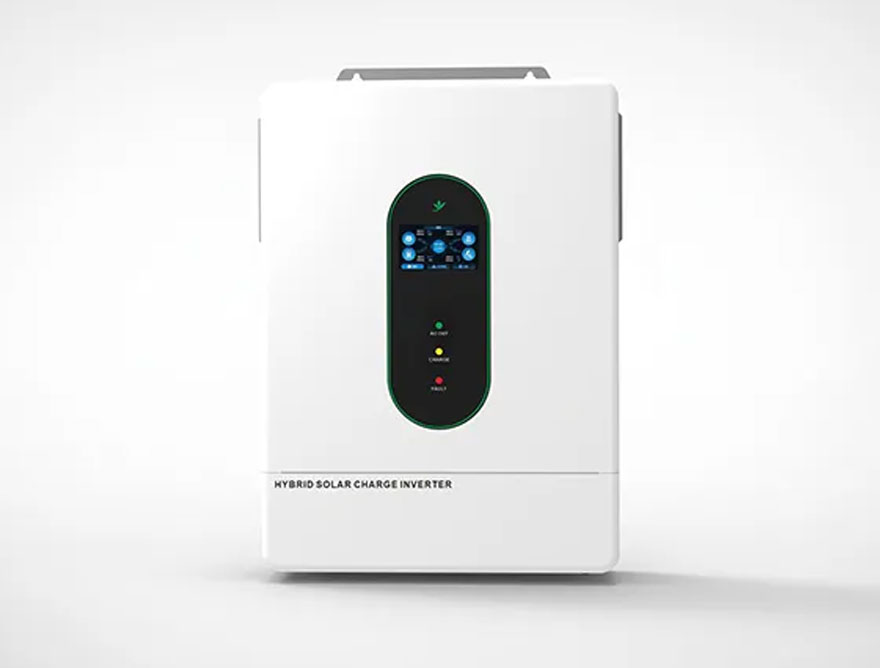
A single-phase or three-phase hybrid inverter should be selected according to the site’s electrical service, load distribution, local interconnection rules, and required output rather than according to a general preference.
Single-phase systems are common in homes and small businesses. They are often simpler to integrate where the building already uses single-phase service. A single phase hybrid inverter can be suitable for household appliances, small offices, retail sites, and light workshop loads when its continuous and surge capabilities match the demand.
Three-phase systems are common in larger commercial buildings, factories, farms, pumps, HVAC systems, and sites with three-phase motors. The buyer must check whether the inverter supports unbalanced loads and how much power can be delivered per phase. A “15 kW three-phase” label does not automatically mean any single phase can supply 15 kW.
Low-voltage battery systems, often centered around nominal 48 V classes, use higher DC current at a given power. They can be familiar and serviceable for smaller systems but require careful cable and protection sizing. High-voltage batteries reduce current for the same power and are often used in larger systems, but they require compatible battery modules, high-voltage safety procedures, and approved communication.
Split-phase systems for 120/240 V markets require another specific architecture. A product name translated as “phase loss” can confuse buyers; navigation and documentation should use the recognized electrical term “split phase inverter” when that accurately describes the output.
Hybrid inverter sizing is the process of matching inverter power, PV input, battery power, battery energy, and backup capability to the site’s real load profile and electrical constraints.
Start with measured demand rather than the sum of every appliance nameplate. Record average load, daytime load, evening load, maximum simultaneous demand, short-duration surges, critical loads, and seasonal changes. A 10 kW building may rarely exceed 4 kW, while another site with the same monthly energy use may have a 9 kW compressor start.
For a simplified residential example, assume critical loads average 1.2 kW and must run for five hours without solar. The required delivered energy is 6 kWh. If the usable battery fraction is 90% and the combined discharge and inverter efficiency is represented by 92% for planning, the nominal energy requirement is approximately 6 ÷ 0.90 ÷ 0.92 = 7.25 kWh. A design margin may increase the selected capacity further. This calculation is an example, not a universal rule; actual values must come from the battery and inverter datasheets.
Inverter power should cover the planned simultaneous load with reasonable margin, while surge capacity should cover motor and compressor starts. Battery discharge power must also support that load. A 10 kWh battery with a 0.5C continuous discharge limit may supply about 5 kW before other restrictions, whereas another 10 kWh battery may support a different current.
PV sizing should respect the inverter’s allowable DC oversizing and all input limits. Oversizing PV can improve energy capture in weak sun, but excessive array power, voltage, or current can violate the design envelope. Verify whether the inverter can charge the battery and serve loads simultaneously at the expected levels.
The most important hybrid inverter specifications are the limits that determine compatibility, usable output, safety, and control behavior in the planned system.
| Specification | Why It Matters | Buyer Question |
|---|---|---|
| Rated and maximum AC output | Defines continuous supply and possible short-duration output | Can it support the real simultaneous load at site temperature? |
| Surge capability and duration | Determines motor, pump, compressor, and transformer starting performance | At what overload percentage, for how many seconds, and under which mode? |
| PV voltage and current limits | Controls string length and parallel-string design | Are cold-weather Voc and current within every model-level limit? |
| Number of MPPTs | Supports different roof planes and string conditions | How many independent trackers and strings per tracker are available? |
| Battery voltage and current | Controls battery compatibility and maximum charge/discharge power | Which battery models and communication protocols are validated? |
| Backup output | Defines what can remain powered during an outage | Is it whole-home, selected-load, three-phase, and unbalanced-load capable? |
| Transfer time | Affects sensitive electronics and continuity | What is the tested transfer time under the intended mode? |
| Enclosure rating | Relates to dust and water protection | Is the installation indoor, sheltered, or exposed, and what rating is verified? |
| Parallel capability | Allows power or redundancy expansion | Does parallel operation work on-grid, off-grid, or both? |
| Monitoring and controls | Supports commissioning, diagnostics, and energy management | What local and remote data, alarms, APIs, and user permissions are available? |
Peak efficiency is useful but incomplete. The system spends much of its life below rated power, so partial-load efficiency and standby consumption also affect energy yield. Buyers should ask how efficiency was measured and whether weighted efficiency values are available. The Hootrum hybrid category currently cites maximum conversion efficiency up to 98.6% for relevant products; model selection should still rely on the exact datasheet and applicable test method.
A battery changes hybrid inverter design by adding energy capacity, charge and discharge limits, communication requirements, thermal constraints, and backup-reserve decisions.
Battery energy is measured in kilowatt-hours, while inverter output is measured in kilowatts. Confusing these units is a common procurement error. A 10 kWh battery does not automatically provide 10 kW, and a 10 kW inverter does not determine how many hours the load will run. The available runtime depends on usable battery energy and load, while available power depends on battery current limits, voltage, BMS restrictions, temperature, and inverter limits.
LiFePO4 systems are widely used in stationary storage because of their cycle-life, thermal, and voltage characteristics, but chemistry alone is not enough. The inverter and battery must exchange state of charge, voltage, current limits, temperature, alarms, and contactor status through an approved communication protocol. “CAN compatible” is not a guarantee that two independently sourced products will work together.
For residential projects, a home energy storage system should be selected after defining critical loads, target backup duration, solar recharge potential, installation location, future expansion, and the utility tariff objective. For commercial projects, the design may also need demand-limit control, phase balancing, fire-safety provisions, remote operation, and coordination with a building-management or energy-management system.
Safety and compliance questions determine whether the inverter can be legally connected, safely installed, and supported in the target market.
IEC 62109-1 defines general safety requirements for power conversion equipment used in photovoltaic systems, while IEC 62109-2 addresses particular inverter requirements. Grid-interconnection rules are market-specific and may cover anti-islanding, voltage and frequency response, power quality, export limitation, and communication. Enclosure ratings, electromagnetic compatibility, battery standards, and installation codes may also apply.
A buyer should request certificates and test reports for the exact model, hardware version, and firmware family. A certificate for a similar product or a different power rating may not cover the ordered unit. The label, manual, datasheet, certificate, packing list, and serial-number system should be consistent.
Protection functions should be explained in engineering terms. Typical topics include PV reverse-polarity response, insulation monitoring, residual-current detection, overcurrent protection coordination, overtemperature protection, surge protection interfaces, islanding protection, phase-sequence detection, battery reverse connection, short-circuit behavior, and emergency shutdown.
For B2B distribution, documentation quality is also a safety factor. Installers need clear wiring diagrams, conductor ranges, torque values, clearance requirements, protection recommendations, firmware instructions, and alarm-code explanations. A technically capable product with weak documentation creates avoidable field risk.
Supplier evaluation is a structured review of product fit, evidence, engineering support, production consistency, documentation, and lifecycle service.
First, send a project brief rather than a generic “best price” request. Include country, grid standard, phase and voltage, PV module data, string plan, battery type, load profile, backup requirement, generator interface, target IP rating, communication needs, expected quantity, and certification requirement. A supplier’s response will reveal whether it understands system design or only quotes a model.
Second, compare samples under repeatable conditions. Test startup, MPPT behavior, battery charge and discharge, grid transitions, backup transfer, overload response, export control, communication stability, alarm handling, and thermal performance. Record firmware version and settings. A sample should represent production hardware and should not rely on undocumented engineering menus.
Third, examine quality control. Ask how incoming components are controlled, how boards are tested, how complete units are aged, which load profiles are used, how calibration is recorded, and how serial numbers link to production data. Review failure-analysis and corrective-action processes rather than accepting a broad “100% tested” statement.
Fourth, assess commercial support. Distributors need accurate lead times, packaging data, spare-parts policy, warranty procedure, technical training, remote diagnostics, localized documentation, and a clear escalation path. The lowest invoice price can become expensive if field failures require repeated site visits or slow replacement decisions.
Common selection mistakes occur when buyers compare one headline specification while ignoring the complete electrical and operational context.
Choosing by rated kilowatts only: The inverter may lack adequate surge power, battery current, phase capability, or backup architecture.
Ignoring string voltage at low temperature: Module open-circuit voltage rises in cold conditions and can exceed the inverter maximum.
Combining unlike arrays on one MPPT: Different orientations or shading patterns can force an unfavorable operating point.
Assuming any LiFePO4 battery is compatible: Voltage may match while communication and current control do not.
Confusing backup output with full-site backup: Some products provide only a limited critical-load port.
Using peak efficiency as the only quality measure: Partial-load efficiency, standby use, thermal derating, and controls also matter.
Overlooking regional grid requirements: Hardware capability does not replace local certification and utility approval.
Publishing unverified specifications: Category ranges should never be copied into a model page without checking the exact datasheet.
A hybrid solar inverter procurement checklist converts the project requirement into verifiable technical and commercial acceptance criteria.
Confirm grid phase, nominal voltage, frequency, and required grid code.
Provide PV module Voc, Vmp, Isc, Imp, temperature coefficient, modules per string, and strings per MPPT.
Define battery chemistry, nominal voltage, usable energy, maximum current, communication protocol, and validated model.
List continuous loads, largest surge load, three-phase balance, and critical backup loads.
Specify operating priorities, reserve state of charge, export limit, tariff schedule, and generator logic.
Confirm enclosure rating, ambient temperature, altitude, installation clearance, and acoustic requirement.
Request exact efficiency, derating, overload, transfer-time, standby-consumption, and protection data.
Verify model-specific certificates, labels, manuals, warranty terms, and serial tracking.
Agree on sample testing, inspection, firmware control, packaging, spare parts, and after-sales workflow.
Record all approved settings and compatibility statements in the purchase specification.
These frequently asked questions provide concise answers to the issues most often raised during hybrid inverter selection and procurement.
Some hybrid inverter models can operate as grid-connected PV inverters without a battery, while others require a battery for particular modes or startup conditions. Confirm the exact model’s batteryless operation, backup behavior, and power limits. A batteryless hybrid system cannot provide stored-energy backup during a nighttime outage.
It can provide outage power only when the product supports island or backup operation and the installation includes correctly separated backup circuits or approved switching. The available power depends on inverter output, battery limits, solar conditions, reserve settings, and load surge.
The required number depends on how many materially different PV groups exist. Arrays with different roof orientations, tilt angles, module types, string lengths, or shading patterns may require separate trackers. More MPPTs are useful only when their voltage and current ratings fit the actual string design.
It may be enough for a home with a moderate simultaneous load, but the answer requires measured demand, critical-load selection, surge requirements, phase configuration, battery power, and local connection limits. Monthly energy consumption alone cannot determine inverter size.
Low-voltage battery systems use lower DC voltage and higher current at the same power, while high-voltage systems use higher voltage and lower current. Each architecture has different cable, protection, battery-module, installation, and scalability implications. The inverter and battery must be designed and validated for the same voltage class.
Send the target market, grid phase and voltage, required power, PV module and string data, battery requirement, load profile, backup loads, generator need, IP rating, communication requirement, certification, order quantity, and expected delivery schedule. This allows Hootrum to recommend a system rather than simply quote a nominal kilowatt rating.
A hybrid solar inverter is the control center of a solar-plus-storage system, but its value depends on correct electrical matching, operating strategy, commissioning, and supplier support. The best model is not automatically the highest-power or lowest-price unit. It is the one whose PV inputs, MPPT arrangement, battery interface, phase configuration, backup output, protection, monitoring, and compliance match the real project.
For distributors, EPC contractors, and system integrators, the practical next step is to prepare a load and system brief before requesting a quotation. Hootrum can then review the intended market, PV design, battery architecture, backup requirement, and installation conditions to identify an appropriate single-phase or three-phase hybrid solution.
1. U.S. Department of Energy — Solar Integration: Inverters and Grid Services Basics: https://www.energy.gov/cmei/systems/solar-integration-inverters-and-grid-services-basics
2. International Electrotechnical Commission — IEC 62109-2 Safety Requirements for Inverters: https://webstore.iec.ch/en/publication/6471
3. Wikipedia — Power Inverter: https://en.wikipedia.org/wiki/Power_inverter
 English